
Infinite Lives
MDickieAdventure
4.1267.00 Reviews
- Version
- 1.0.7
- Installs
- 500.00K
- Age Rating
- Mature 17+
Screenshots


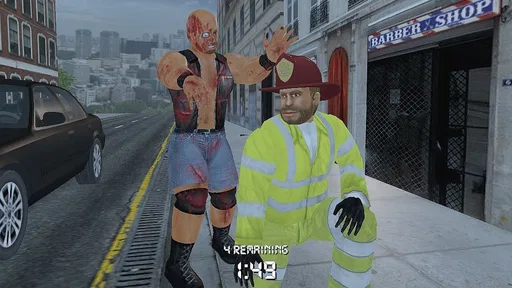

Our Review of Infinite Lives
 Analysis by Appyee
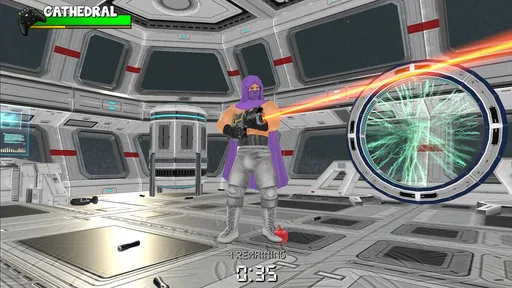
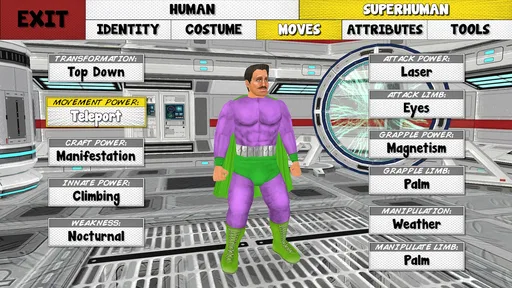
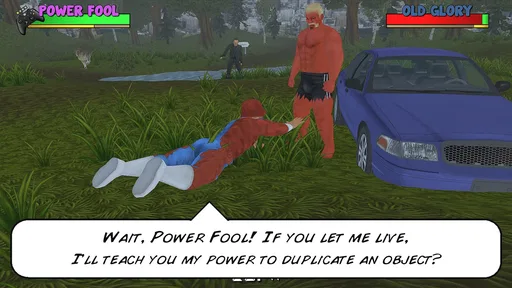
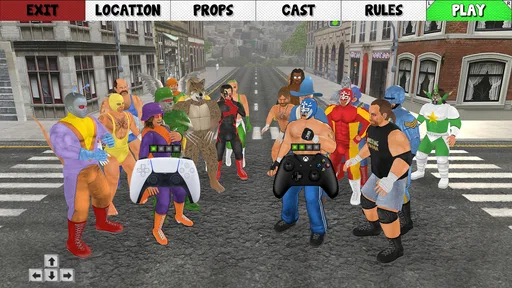
Infinite Lives is the kind of adventure game I would describe as a playground rather than a carefully guided journey. Created by MDickie, it puts the focus on superhumans and subhumans competing for control, but the appeal is less about following a fixed path and more about seeing what happens when different characters, abilities, and decisions collide. I found it most enjoyable when I stopped looking for a traditional beginning, middle, and end and treated each session as an experiment.
The game is free to download, which makes it easy to try without committing money at the start. It is intended for mature players aged 17 and over, and that rating matters because the tone and subject matter are not aimed at children. The current version is 1.0.7, and the game requires Android 7.1 or later. Those details make it accessible to many older devices, although compatibility on paper does not automatically mean every phone will feel equally comfortable during extended play.
How the open-ended adventure feels in everyday play
My first useful adjustment was to stop expecting the game to behave like a conventional mobile adventure. In a typical adventure title, I usually look for missions, clear objectives, and a reliable route through the story. Here, the enjoyment comes from exploring possibilities and watching control shift between powerful groups. That freedom can be exciting, but it also means the game asks more from the player. You need to create your own short-term goals instead of waiting for the game to explain exactly what matters next.
That structure works well for short sessions. Imagine having fifteen minutes before leaving home: I can open the game, make a few decisions, observe how the current situation develops, and stop without needing to complete a long chapter. It also suits a longer evening when I want to test a different approach. The same flexibility that makes a quick visit possible can make the experience feel unfocused if I am looking for a tightly scripted adventure.
The central conflict between superhumans and subhumans gives the setting a clear identity. I did not read it as a simple battle where one side is automatically the correct choice. The more interesting question is how I want to handle control, conflict, and the consequences of getting involved. That makes the game better for players who enjoy improvisation than for anyone who wants a predictable heroic campaign.
My main advice is to play with a small personal objective. Instead of trying to understand every possibility immediately, I might focus on surviving a difficult encounter, testing how a particular character behaves, or seeing whether a risky decision changes the balance of power. This approach reduces the feeling of being lost and turns the open design into something practical.
Speed expectations on mobile devices
Perceived speed is not only about how quickly a game opens. It is also about whether the controls respond naturally, whether transitions interrupt the flow, and whether the game remains comfortable when several things are happening at once. Infinite Lives benefits from its pick-up-and-play nature, but the amount of activity on screen can affect how smooth the experience feels from one device to another.
I would not choose this game expecting the same highly polished presentation as a large, carefully optimized console-style adventure. Its strength is the freedom to create situations, not a visually elaborate tour through a fixed world. That distinction helps set realistic expectations: if the game feels busy during a chaotic moment, the important question is whether the action remains understandable and playable rather than whether it matches a premium blockbuster.
On a newer phone, I would expect the experience to feel more comfortable during longer sessions, especially when the game is being pushed by repeated encounters and changing situations. On an older compatible device, I would begin with shorter play periods and pay attention to responsiveness. Android 7.1 support is useful for reach, but it also means the supported range can include devices with very different processors, memory, and thermal behavior.
There is a practical way to judge this without relying on a benchmark. Start a session when the phone is cool, play through a quiet section, and then continue into a busier stretch. If controls remain predictable and the display does not become distracting, the device is probably a good match. If the phone becomes hot or the game starts feeling delayed, reducing other background activity may help, but I would not expect every older handset to deliver the same result.
What happens during heavy-use moments
The most demanding moments are likely to be the situations where several characters, conflicts, and decisions overlap. Those are also the moments that define the game. A calm scene can show the basic controls, but a crowded confrontation reveals whether I can still understand what is happening and act without fighting the interface.
I found that heavy moments are easier to manage when I avoid making every possible action at once. The game rewards observation. I can pause mentally, identify the immediate threat, and decide whether I want to intervene or let the situation develop. This is more than a play-style preference: it reduces unnecessary input and makes the action feel less chaotic on a small screen.
That creates an interesting trade-off. Players who enjoy emergent situations may see busy encounters as the point of the game, while players who want precise, fast reactions may find the same scenes tiring. Infinite Lives is not at its best when treated like a competitive reflex test. I prefer it when I have enough attention to read the situation and accept that outcomes may not follow the plan.
For longer sessions, I would also watch the phone rather than only the game. Any mobile title with repeated action can become less comfortable as the device warms or the battery drops, and an open-ended game encourages me to continue because there is no obvious final stopping point. A useful habit is to save the game for a moment when the phone is not already handling navigation, video playback, or several other demanding tasks.
Another small but important tip is to avoid judging the game from its first quiet minutes. The early experience may feel simple because I am still learning the rhythm. The more meaningful test is whether I enjoy making decisions once the conflict becomes complicated. If I only want a quick, visually calm distraction, another adventure game with shorter, more controlled stages may suit me better.
Reliability, recovery, and the cost of experimentation
Open-ended games naturally create more unpredictable situations than linear adventures. That unpredictability can feel like freedom, but it also means I need to accept imperfect outcomes. A plan can change because the surrounding situation develops differently than expected. I would not treat every surprising result as a technical problem; sometimes the uncertainty is part of the design.
Recovery is therefore important in two senses. First, I want to be able to return to the game without feeling that a short interruption has ruined the entire experience. Second, I want the game to remain understandable after a failed attempt. Infinite Lives works best when I treat setbacks as information. If a decision leads to trouble, I can try a different approach instead of assuming the whole session was wasted.
That mindset makes the game more forgiving than a strict mission-based adventure, even though it may not feel as orderly. I like being able to experiment without needing to perform perfectly. On the other hand, players who prefer clearly signposted progress may find the lack of a strong, traditional structure frustrating. The same freedom that supports replayability can make recovery feel vague when I am unsure what I should try next.
Because the game is free, the first download is a low-risk way to find out which side of that trade-off suits me. There are in-app purchases priced at $3.99 per item, so I would approach optional spending carefully. I would first decide whether the basic experience already fits my expectations, then consider purchases only if they solve a specific problem for my own play style. Paying should not be the first response to confusion, difficulty, or a slow session.
The mature age rating is another reliability consideration for families. I would not install this on a child’s device simply because the game is free or because the phone meets the technical requirement. The 17+ rating signals that the tone is intended for adults, so parents should treat it differently from a general-audience adventure game.
Device constraints and practical setup
The minimum operating system requirement is Android 7.1, which gives the game a broad potential audience. Still, operating-system support is only the starting point. Two phones running the same Android version can feel very different depending on their age and hardware. Storage space, available memory, screen size, and battery condition can all influence how pleasant a long session becomes.
I would install it on a phone with enough free space to avoid creating unnecessary pressure on the system. I would also close demanding apps before playing, especially if the device is older. This is not a guarantee of perfect performance, but it is a sensible way to separate a device limitation from a problem with the game itself.
Screen size matters more here than it might in a simple puzzle game. When the action becomes crowded, a smaller display can make it harder to distinguish what deserves attention. A larger phone or tablet may make the experience easier to read, while a compact device may be better for quick sessions. I would choose comfort over raw portability if I planned to play for a long time.
Battery condition is worth considering too. A phone with a worn battery may make any active game feel inconvenient, particularly if I play away from a charger. I would avoid judging Infinite Lives solely during a low-battery session, because reduced device performance or heat can change the overall impression. Testing it when the phone is cool and reasonably charged gives a fairer sense of its day-to-day behavior.
Players also need to decide whether this is the right kind of adventure at all. If I want a cinematic story, hand-crafted puzzles, or a clearly ordered campaign, I would look toward a more traditional adventure title. If I want to create unusual situations and see how a conflict evolves, this game has a more distinctive reason to exist. It is not simply a smaller version of a console adventure; it asks me to supply more of the direction.
Who will enjoy the freedom, and who should skip it
I would recommend Infinite Lives to players who like experimentation, unusual outcomes, and stories that emerge from choices rather than from a fixed script. It is especially suitable for someone who enjoys returning to the same game with a different intention. One session can be about cautious observation, another about taking control, and another about testing how far a risky approach can go.
It is also a good match for players who dislike being forced through a long sequence before they can explore. The free entry point makes it easy to test, and the broad Android requirement may help people using older phones. The game’s mature positioning also makes it more appropriate for adults who want a darker, less child-oriented adventure experience.
I would skip it if I need constant guidance, polished linear storytelling, or a perfectly predictable difficulty curve. I would also be cautious if my phone is already struggling with active games or if I mainly play on a very small screen. In those cases, a simpler adventure built around short stages may feel more comfortable and easier to follow.
Compared with the usual alternatives in the adventure category, Infinite Lives stands out through its emphasis on possibility rather than completion. A conventional title may give me a map, objectives, and a satisfying route toward an ending. This game gives me a situation and asks what I want to do with it. That is a meaningful difference, not just a change in presentation.
My performance verdict after weighing the trade-offs
My overall view is that Infinite Lives is most convincing when I judge it as an open-ended mobile experiment. The game’s speed and stability matter, but they are only part of the experience. The bigger question is whether I enjoy managing uncertainty while the conflict between superhumans and subhumans develops around my decisions.
The audience response is encouraging, with a 4.1 average from around 6 thousand ratings and more than 500 thousand installs. Those figures suggest that the concept has reached a substantial group of players, but they do not replace personal testing. A game built around freedom can divide players precisely because its strongest feature may feel liberating to one person and directionless to another.
MDickie has made something that is easy to approach but not necessarily easy to categorize. I can use it for a short break, yet its deeper appeal appears when I return and try a different method. I would keep expectations realistic about presentation and device performance, especially on older hardware, and I would remember that the mature rating makes it unsuitable for younger players.
My final recommendation is simple: try it if you want a mobile adventure where your curiosity is more important than following instructions. The free download lowers the barrier, while the optional $3.99 purchases per item make it sensible to decide slowly rather than spend immediately. For me, the game earns its place through the situations it lets me explore, not through a perfectly controlled campaign. If that sounds like the kind of freedom you enjoy, Infinite Lives is worth a careful trial; if you want a guided story with guaranteed momentum, another adventure will probably be the better choice.
Verdict
Strengths of Infinite Lives
- Removes the pressure of waiting for lives to refill.
- Makes difficult levels easier to replay and practice.
- Useful for long gaming sessions without frequent interruptions.
- Helps players progress faster through challenging stages.
- Simple benefit for users who dislike energy-based restrictions.
Limitations of Infinite Lives
- May reduce the challenge and satisfaction of earning progress naturally.
- Could encourage longer screen time than intended.
- Availability and compatibility may vary by device or game version.
- May not work reliably after future app or game updates.
- Using modified features can create account or security concerns.
Other Releases by MDickie
View All
Wrestling Revolution 3D
Sports4.1
Similar Picks in This Category
View All
Roblox
Roblox Corporation4.2

Pokémon GO
Niantic, Inc.3.5

Ninja warrior: legend of adven
TOH Games4.6

Ninja Arashi
Black Panther4.6

Eyes - The Horror Game
Fearless Games sp. j.4.5

Critical Action:Gun Strike Ops
FPS Shooter & Action Game4.3
Frequently Asked Questions
What is Infinite Lives, and how does it work?
Infinite Lives is a mobile gaming app or feature designed to let players continue playing without the usual limit on available lives. After installing it, users can access gameplay with fewer interruptions caused by waiting for lives to refill. The exact experience may depend on the game version, device, and whether the feature is officially supported by the developer or provided through a separate application.
Is Infinite Lives safe to download and use on Android or iOS?
Safety depends largely on where Infinite Lives is downloaded and how it interacts with your device or game. We recommend using only the official Google Play Store or Apple App Store, checking the developer name, permissions, ratings, and recent reviews before installing. Avoid unofficial modified files that request unnecessary access, disable security settings, or ask for account credentials.
Does Infinite Lives work with every mobile game?
No, Infinite Lives should not be assumed to work with every game. Compatibility can depend on the specific title, operating system, game version, server connection, and whether the game stores progress locally or online. Some games may block third-party tools or detect unusual activity. Always review the app description and current user feedback to confirm compatibility before downloading.
Can using Infinite Lives affect my game account or progress?
Using any unofficial tool that changes how a game handles lives may create risks for your account and saved progress. Online games often monitor unusual gameplay patterns, and violating their terms can lead to warnings, temporary restrictions, or permanent bans. Progress could also be lost if the app modifies local files incorrectly. Back up your account and read the game’s policies first.
Is Infinite Lives free, and are there any hidden costs?
The download may be free, but the total cost depends on the version and distribution method. Some apps include advertisements, optional purchases, subscriptions, or premium features. Others may redirect users to external pages or request payment for functions that are not clearly explained. Before installing, check the store listing, in-app purchase section, privacy policy, and cancellation terms carefully.
Play our best games!


